




VanDevere Chevrolet in Akron, OH
Blog / Akron Chevrolet Dealer

2027 Chevy Bolt Returns: What Drivers Should Know About Chevrolet's Electric Future

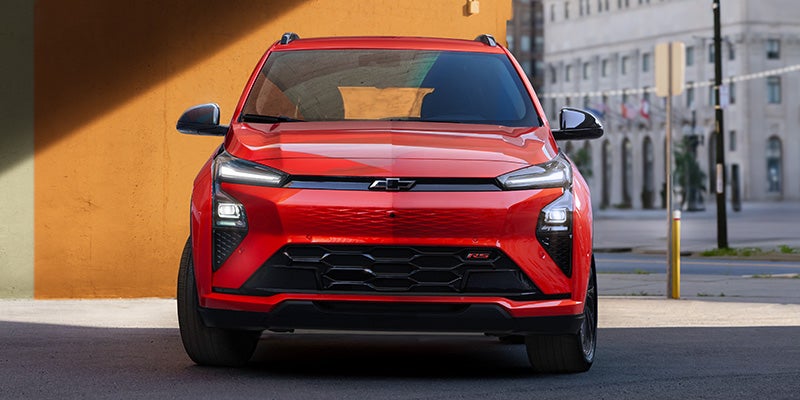
Red Chevrolet SUV front view in city setting


The Chevrolet Bolt is back for 2027, and its return is more significant than simply reviving a familiar name. Chevrolet has kept the compact hatchback format but changed many of the things that determine how easy an EV is to live with. Range rises to an EPA-estimated 262 miles, DC fast charging becomes dramatically quicker, and a native NACS charging port opens access to compatible NACS public chargers. For drivers around Akron, OH, the new Bolt looks designed to remove some of the compromises associated with its predecessor.

A New Battery Brings 262 Miles of Range

The 2027 Bolt uses a single permanent-magnet electric motor producing 210 hp and 169 lbs. ft. of torque, driving the front wheels through a single-speed gearset. More significant for most EV shoppers is the new 65-kWh lithium-iron-phosphate battery, which provides 262 miles of EPA-estimated range on a full charge. A heat pump handles active cabin and battery heating and cooling, an important consideration in Ohio, where cold winter temperatures can affect EV efficiency. Chevrolet covers the battery for 8 years or 100,000 miles, adding some reassurance for drivers making their first move into an electric vehicle.

Faster Charging Is the Bigger Story

Range tends to attract the headlines, but charging speed can have just as much influence on everyday EV ownership. The 2027 Bolt supports DC fast charging at up to 150 kW, more than 2.5 times the rate of the previous Bolt EV. Chevrolet estimates a compatible DC fast charger can take the battery from 10% to 80% in approximately 25 minutes. Level 2 AC charging reaches up to 11.5 kW and can add approximately 40 miles of range per hour under appropriate conditions. The Bolt is also the first Chevrolet with a native NACS port, providing access to compatible NACS charging stations, including compatible Tesla Superchargers, without a CCS-to-NACS adapter.

The Cabin Gets a Technology Reset

The changes continue inside, where an 11.3-inch infotainment touchscreen is paired with an 11-inch Driver Information Center. Google built-in provides compatible navigation, apps, voice assistance, and connected services, while the redesigned cabin adds an open center console, extra passenger-side dashboard storage, USB-C ports, and available wireless phone charging. One Pedal Driving allows the Bolt to slow and stop primarily through accelerator input in many situations while regenerative braking returns energy to the battery. LT and RS models give shoppers 2 distinct choices, with RS adding 17-inch Black wheels, Gloss Black roof rails, Evotex seating with Red stitching, unique badging, and multi-color ambient lighting.

It Can Even Send Power Back Home

More than 20 safety and driver-assistance features are standard on the 2027 Bolt, including Intersection Collision Mitigation, Rear Automatic Braking, and Rear Cross Traffic Alert with Braking. Available Super Cruise® can provide hands-free driver assistance on compatible roads. The Bolt is also Vehicle-to-Home capable when paired with compatible GM Energy equipment. During an outage, a properly equipped Bolt can supply electricity back to the home, turning the battery sitting in the driveway into something more than transportation.

Where the New Bolt Fits into Chevrolet's EV Family

The returning Bolt conquers the smaller end of Chevrolet's growing EV lineup, alongside larger choices such as Equinox EV, Blazer EV, and Silverado EV. Its compact dimensions remain well suited to commuting and urban driving, but the combination of 262 miles of EPA-estimated range and substantially quicker DC fast charging expands what owners can comfortably ask of it. Akron, OH, drivers can visit VanDevere Chevrolet to explore new Chevrolet EV inventory, compare Bolt LT and RS models, learn about EV charging options and GM Energy home charging, explore financing options, or schedule a test drive online now.  
Posted in:

Related Posts

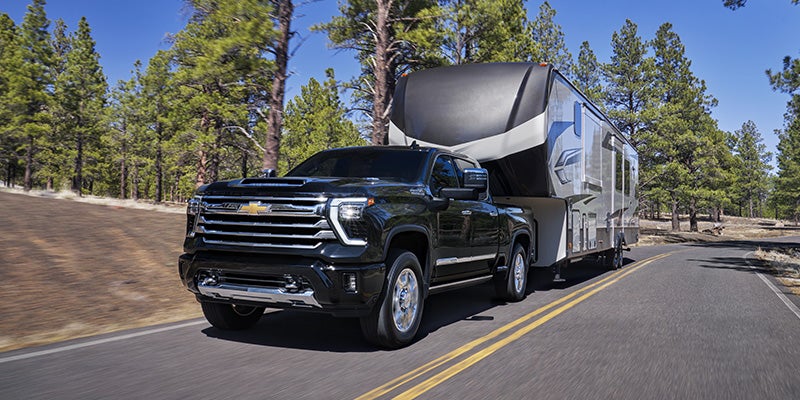
Black Chevrolet Silverado towing trailer on road

Chevrolet Towing Guide: Finding the Right Truck or SUV for Your Trailer Needs

Choosing a tow vehicle by looking for the biggest number in the brochure is tempting, but it isn't the best way to go about it. A fishing boat, travel trailer, equipment trailer, and large fifth-wheel place very different demands on a vehicle. Loaded trailer weight, passengers, cargo, hitch equipment, drivetrain, and vehicle configuration all enter the calculation. For drivers around Akron, OH, Chevrolet covers an unusually broad towing range, from the 5,000 lb. Traverse to a properly equipped Silverado 3500 HD capable of towing 36,000 lbs. Start With What You're Pulling Before choosing the truck or SUV, establish the trailer's loaded weight. That means accounting for equipment, water, supplies, luggage, and everything else that gets added after the trailer leaves the factory. Payload is equally important because passengers, cargo, accessories, and trailer tongue or pin weight all count against the vehicle's payload capacity. Maximum advertised towing figures apply to specific configurations, so engine choice alone doesn't determine capability. Cab, bed, drivetrain, axle, hitch, and other equipment can change the rating. Check the specifications for the exact Chevrolet before hitching up. Silverado 1500 Covers a Broad Towing Range The 2026 Silverado 1500 gives buyers 4 engines to work with. TurboMax™ produces 310 hp and 430 lbs. ft. of torque, the available 5.3L EcoTec3 V8 makes 355 hp and 383 lbs. ft. of torque, and the available 6.2L EcoTec3 V8 produces 420 hp and 460 lbs. ft. of torque. The available Duramax® 3.0L Turbo-Diesel delivers 305 hp and 495 lbs. ft. of torque and enables a maximum available towing capacity of 13,300 lbs when properly configured. Maximum available payload reaches 2,260 lbs. Available trailering technology includes up to 14 camera views, an in-vehicle Trailering App, and Trailer Side Blind Zone Alert, while the available Multi-Flex Tailgate offers 6 configurations. Silverado HD Takes Over for Serious Weight Once trailer weights move beyond light-duty territory, Silverado HD models become the natural place to look. The 2026 Silverado 2500 HD and 3500 HD offer a standard 6.6L gas V8 producing 401 hp and 464 lbs. ft. of torque or an available Duramax® 6.6L Turbo-Diesel V8 generating 470 hp and 975 lbs. ft. of torque. Both pair with an Allison® 10-speed automatic transmission. Maximum available towing reaches 19,080 lbs. with the gas engine, while a properly configured 2500 HD can tow up to 22,420 lbs. Move to the appropriate Silverado 3500 HD diesel configuration and that figure climbs to 36,000 lbs. Available camera views and trailering technology can also make hitching and managing a large trailer less of a guessing exercise. Don't Rule Out a Chevrolet SUV Not every towing job calls for a pickup. The 2026 Tahoe combines 3-row passenger space with up to 8,400 lbs. of available towing capacity when properly equipped. Tahoe and Suburban offer 5.3L V8, available 6.2L V8, and available Duramax® 3.0L Turbo-Diesel power, giving families the ability to combine substantial passenger capacity with recreational towing. For lighter trailers, the 2026 Traverse uses a 2.5L Turbocharged engine producing 328 hp and 326 lbs. ft. of torque and provides up to 5,000 lbs. of towing capacity with included trailering equipment. Hitch View, Hitch Guidance, and a Trailering App are also standard, which is a welcome collection of equipment if backing up to the hitch isn't your favorite weekend activity. Match the Chevrolet to the Trailer at VanDevere Chevrolet The right tow vehicle isn't automatically the one with the highest rating. Silverado 1500 provides up to 13,300 lbs. of towing capability for properly configured models, Silverado HD stretches as high as 36,000 lbs., Tahoe offers up to 8,400 lbs. in a 3-row SUV, and Traverse handles up to 5,000 lbs. Akron, OH, drivers can visit VanDevere Chevrolet to compare Chevrolet trucks and SUVs, explore Silverado configurations, review available trailering equipment, browse new Chevrolet inventory, or schedule a test drive online before deciding which vehicle fits the trailer they'll be pulling.

Chevrolet service advisor customer consultation

How to Prepare Your Chevrolet for Winter Driving Before the First Freeze

Winter can arrive quickly in Akron, OH, and the last thing you want is to be caught off guard when temperatures plummet. Knowing how to prepare your Chevrolet for winter driving before the first freeze is one of the best things you can do as a vehicle owner. A little attention now can save you from costly repairs and unsafe road conditions later. Check Your Tires Before Winter Arrives When it comes to Chevy winter maintenance, your tires are one of the most important places to start. Cold temperatures cause tire pressure to drop, which affects handling and stopping distance. Check your tire pressure regularly as the weather changes, and make sure your tread depth is adequate for wet and icy roads. If you live somewhere that sees significant snowfall, winter tires offer noticeably better grip than all-season options. Your Chevrolet's owner manual can guide you on the correct tire specifications for your specific model. Test Your Battery Before Cold Weather Hits A weak battery that holds up in summer can fail completely in freezing temperatures. Cold weather puts extra strain on your battery, making it work harder to start the engine. As you get your Chevy ready for winter driving, have your battery tested by a qualified technician before temperatures drop below freezing. If your battery is three years old or more, it may be worth considering a replacement ahead of the season. This simple step can prevent an unexpected no-start situation on a cold morning. Top Off and Swap Out Your Fluids Fluid maintenance is a key part of how to prepare your Chevrolet for winter driving safely. Make sure your antifreeze mixture is properly balanced to handle the low temperatures in your area. Check your windshield washer fluid and switch to a winter-grade formula that will not freeze in cold conditions. Oil viscosity is also important in winter. Depending on your model, a thinner oil grade may help your engine start more easily in cold weather. Your Chevrolet service center can advise on the right product for your vehicle and driving habits. Inspect Your Brakes for Winter Confidence Strong brake performance is important when roads are slippery. If you've noticed any grinding, squealing, or your Chevy is taking longer to stop, those are signs your brakes need attention before winter sets in. As part of your Chevy winter maintenance routine, have a technician inspect your brake pads and rotors for wear. Anti-lock brakes work best when the pads and rotors are in good shape, so do not skip this step. Getting your brakes serviced ahead of the first freeze gives you added confidence on icy roads. Improve Visibility With Fresh Wiper Blades and Lights Good visibility is essential for safe winter driving. Replace your wiper blades before winter arrives, and consider switching to heavy-duty winter blades that handle snow and ice more effectively. Make sure all exterior lights, including headlights, taillights, and turn signals - are functioning properly. Shorter daylight hours and reduced visibility during snowstorms mean your lights will work harder this season. Keeping them in top condition is a simple step that makes a difference in preparing your Chevrolet for winter driving. Visit VanDevere Chevrolet for a Full Winter Checkup Getting all of these items checked at once is the most convenient way to prepare your Chevy for winter. A certified technician can inspect your tires, battery, fluids, brakes, and visibility components during a single visit, giving you peace of mind before the cold weather settles in for good. So, if you drive a Silverado, Equinox, Trailblazer, or any other model in the Chevrolet lineup, now is the perfect time to schedule a Chevrolet service appointment. Don’t wait for the first freeze to find out something needs attention. Drivers in Akron, OH canstop by VanDevere Chevrolet to book a seasonal service appointment today.

Vehicle brake inspection service technician

When Should You Service Your Chevrolet? A Maintenance Guide for Long-Term Ownership

Owning a Chevrolet means you’re driving a vehicle that’s designed to last for years, and keeping up with routine maintenance is one of the best ways to protect it. If you drive a Silverado, Equinox, or Trax in Akron, Ohio, knowing when to service your Chevrolet can save you from costly repairs down the road. This guide breaks down the key services to stay on top of throughout the life of your vehicle. Oil Changes: The Foundation of Your Chevrolet Maintenance Schedule An oil change is the item on your maintenance schedule that you have to do most frequently, and regular oil changes are also one of the most important items on the list. Most Chevrolet vehicles use an Oil Life Monitoring system, which tracks driving conditions and alerts you when it's time for a change. In general, full-synthetic oil can last up to 7,500 miles or more depending on your driving habits, but you should never ignore the reminder when it appears on your dashboard. Frequent short trips, towing, and stop-and-go driving can shorten the interval. If you're unsure where you stand, a quick visit to a Chevy service center can clear things up fast. Tire Rotations and Inspections Tires wear unevenly depending on whether your vehicle is front-wheel, rear-wheel, or all-wheel drive. Rotating your tires every 5,000 to 7,500 miles helps distribute wear more evenly, extending their usable life. Your service technician will also check tire pressure and tread depth during this visit. You should also schedule a full tire inspection if you notice vibration, pulling to one side, or uneven wear patterns. Addressing these issues early keeps your Chevy driving safely and smoothly. Brake Service: Don't Wait for the Squeal Brakes are one of the most safety-critical systems on your vehicle. A general rule of thumb is to have brake pads inspected every 12,000 miles, though actual wear depends heavily on driving style and terrain. Most brake pads give you an audible warning - a high-pitched squeal - when they're getting low. Brake fluid should also be checked periodically. Over time, it absorbs moisture, which can reduce braking performance. Your Chevy service center can flush and replace fluid as part of a complete brake service. Battery Testing and Replacement A weak battery can leave you stranded without much warning. Most automotive batteries last between three and five years, though extreme heat and cold can shorten battery life. It's a good idea to have your battery tested once it reaches the three-year mark. Signs of a failing battery include slow engine cranking, dimming lights, or a battery warning light on your instrument panel. Catching this early is far easier than dealing with a no-start situation. Multi-Point Inspections and Fluid Checks Beyond the major services, your Chevrolet benefits from regular multi-point inspections that cover everything from air filters and belts to coolant and transmission fluid. These inspections give technicians a chance to spot developing issues before they become serious problems. Following your Chevrolet maintenance schedule and staying current on fluid checks is one of the simplest ways to keep your vehicle running like new. Drivers throughout the region can rely on consistent, professional service to keep every system in check. Visit VanDevere Chevrolet for Expert Chevy Service So, if you're due for a Chevy oil change or a full multi-point inspection, the team at VanDevere Chevrolet is here to help. Visit us at VanDevere Chevrolet today to schedule your next service appointment.